Saturday, December 17, 2005

Warmth


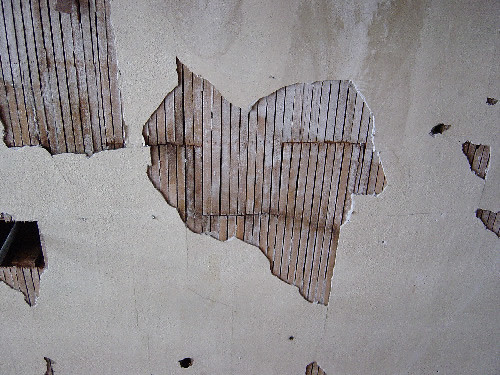
The Tango Center is over a 100,000 cubic feet of space. Right now, it's below freezing outside, and we have holes in the ceiling and vents in the roof ... so, until our ceiling is sealed (something we're working on), heating the place is very hard.

As the temperature drops to about 62 degrees fahrenheit (17 C) people start to complain about the cold. As it drops to 60 F, they start to bundle up. At 58 F, they get manic, and try to dance continously, energetically.

So I was wondering ... what kind of Tango music can keep people warm?

Recording "warm tones" is a real acoustic engineering challenge, even today. You need the right microphones, positioned carefuly, on the right instruments ... and a good ear for mixing. Some of the recordings of the "new acoustic movement" in the 1970's (David Grisman is an example) began to approach the true quality of warmth.

So, clearly the original tango recordings before this time won't achieve this quality. But some of the older stuff is quite sensitive and tender, and people will often 'read' the warmth into the playback.

But when the room is cold, that doesn't help a lot.

Much of the modern electronic music doesn't try to be warm, although it tends to sound warmer than the very brassy recordings of Tango from the 50's & 60's. Late De Angelis, including one of my favorite pieces "Pavadita", sounds pretty cold in a cold room. The later Tango covers, like the post-Canaro, 1990's "F. Canaro Orquesta", sound even colder ... you can hear the pauses hanging in the air like icicles. Canaro would know better ... laying down lots of sound helps to make up for sound infidelity at all frequencies.

Luckily, with some late Piazzolla, we have explosive original pieces, semi-danceable, with good recording quality. If it's bitter cold, give them a try, at the end of each tanda. Then play some modern acoustic string instruments for cortinas. And the most romantic golden age songs you can find. That's the best I could come up with, on the spur of the moment yesterday.

I also threw in a Beach Boys song: "The Warmth of the Sun".

Sunday, December 11, 2005

Different fusions

For each of the 200 or more milongas at the Tango Center, the music, the mood, etc, has been marvelously different. They've been all good parties, certainly. At least judging by the happiness of the majority. Certainly, individuals have bad nights ... their dancing is off, everyone else's dancing is off, no one danced with them, the room's temperature wasn't right, something really irritated them, the music didn't please them, etc.

Most of that stuff is part of life. And most of that stuff "gets worked out" in the long run. Dancing improves, adaptive ability improves, the party's mood lifts you beyond small concerns and large troubles ... and the music? The musical mix finds its own level: something that pleases most people, most of the time, and teaches tolerance to the rest.

This level is different in different places. And in many places there's no levelling at all: at Portland's Wednesday Nocturnal milonga, you don't know what you'll get, because the DJ's all have very distinct ideas about what should be played. I should say, you know what you'll get if you know the DJ's.

At the Cellspace milonga, on the same night in San Francisco, there's been a lot of discussion and trial and error regarding the appropriate mix for that milonga's community of dancers. And each time I go, I find it pretty much sounds the same. So you don't have to pay really close attention to the DJ's -- the mix is a very reliable "cellspace fusion".

Now, we in Eugene haven't really branded our fusion yet. It leans much more heavily in the Golden Age direction. And it has a taste for ethnic, alternative and nuevo music, in equal parts. It has no taste for traditional covers ... Color Tango, the movie 'Tango', etc. This is pretty distinct ... even in Buenos Aires, traditional covers are more accepted than they are in Eugene. I just danced at a few milongas in Moscow, and most of the music was traditional covers.

Eugene has a strong relationship with tough Golden Age music, because of who we invited to teach & DJ, because of the tastes of our instructors, etc.

But there's one more reason ... the Tango Center's experiments with live music. When live musicians tried to play for tango dancers, they often failed to make people happy. This became a real crisis ... some musicians were insulted, some retreated into Golden Age arrangements ... but ultimately we tried to look at the structure of golden age music to see why it worked.

Most people who don't like Golden Age music, don't like the 'antique sound' and/or the sound quality ... or at least, they don't like too much of it. Usually they're happier with the better Golden Age recordings, like Pugliese from the 60's, or Di Sarli from the 50's, or Canaro from those same periods. But there's a harshness to some of these Late Golden Age recordings (De Angelis & D'Arienzo's particularly), which are a product of their time -- although they're excellent dance pieces, you just shouldn't play them too much.

So, new live tango musicians need to look at pieces from the 1930's and 1940's to really understand what's going on. This is probably why we're still very much into it. Many of us would like to create a "Eugene Tango" new music scene, and Golden Age music is our reference point -- not the mixes of other tango comunities. The real fusion will be the product of this new, second golden age. I hope.

Music & democracy

So much about democracy is little understood in Modern American culture, that it takes a community-level discussion to reveal the basic patterns. The following may seem obvious, but really, we don't think about it or talk about it much.

Democracy happens even without voting, to varying degrees. -- when you're a DJ at a regular milonga, some 10% of the crowd is very vocal about music. But the rest vote with their feet. They're either dancing, or they aren't. They're having a good time, or they're sulking. Sometimes that has to do with the music, and sometimes it doesn't, so you have to get to know a crowd over time. But when you do, the crowd has essentially voted on the musical format.

Don't change my vote unless I tell you to. -- A vocal dancer recently let me know that his tastes had changed, and that certain kinds of alternative music really added spice to the evening for him. He was changing his vote.

Given over two years of this kind of voting at The Tango Center, as we embark on using a computer tool to poll ranges of musical percentages for an evening, we have to make sure (A) that these opinions get recorded and (B) that we don't move them around ... you vote once, until you change your vote. Oregon voters continually have to vote down a sales tax forwarded them by the State legislature. We have the opportunity, electronically, to let someone's vote stand until known otherwise.

Why are we embarking on this exercise in electronic voting? Partly because we want to see if it's a useful tool, something that could be used for weightier matters, outside of the Tango world. But, also, we have two major Tango extravaganzas a week, and many smaller ones ... so many people are involved, and the population is so much in flux, that there needs to be a community memory. We're loading that community memory with pertinent community opinion.

Mixing: an additional possibility ...

One thing I'd like to try, is create real Tango 'house mixes' ... basically tanda-length 'pieces', sometimes with golden age pieces embedded in them, carefully, in their entirety, etc ... with nuanced use of pauses and switching between different nuevo & alternative effects. Many new pieces have no real endings, but bits of them are wonderful ... this kind of sound engineering isn't done much in tango ... but it could be interesting now and then.

Sunday, December 04, 2005

Pleasing everyone

In the big picture, of building a tango community, it seems that an all-golden-age milonga, or an all-alternative milonga, is not really aimed at community inclusiveness. It's divisive.

That's ok, most nights. But not on Friday & Saturday nights. These are like the worker's sabbath: a couple that hasn't seen each other all weekend, want to go out, socialize, and dance. They want to hear all differents kinds of tango-danceable music. That can draw from a range of musical eras. But it has to be good. And good for Tango.

It is important to have the other, more divisive kind of milonga or practica. It's an opportunity for DJ's to test music -- not all golden age Tango is danceable, for example. But a higher percentage is danceable, relative to later Tango eras. That's why a high percentage of golden age music, like 75%, works well for a growing community. But you have to pepper it with nuevo, traditional covers, and alternative. Later in the evening, a few of these could even be strung into tandas. Depending, as usual, on the crowd. A DJ is there to please the dance crowd -- in this case, a Tango dance crowd.

A DJ knows that, but very few musicians have experience with this. Some do, and try to play for dancers. It isn't easy, when there's no culture of musicians who do this.

Sunday, November 27, 2005

Community music machine


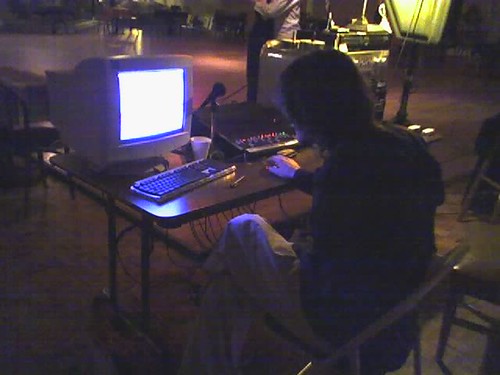
We needed a learning tool for Tango music, for Dj-ing etc, at The Tango Center. It seemed kind of strange that a small number of DJ's were doing all the work, collecting all the music, sorting through it, learning orchestra names, etc. So, we put together an old Mac G4, and made it part of the DJ station. Now everyone puts their playlists on one machine, so we can all listen and learn from the music in classes, practicas, milongas etc. It really works wonderfully. Highly recommended for any community project.

Monday, October 31, 2005

Piazzolla take one

Astor Piazzolla was an innovative and brilliant musician & composer. His pieces are superb and suffused with feeling. They are a major contribution to the World's musical canon.

The music he wrote was Tango, because it is recognizable as Tango. But it probably wasn't intended for dancing ... Piazzolla led a highly skilled Tango band in Tango's Golden Age, and was part of the culture that created the classic Tango dance structure. At Eugene's Tango Center, we had one of his proteges, Claudio Mendez, playing at a milonga ... and he plays classic dance Tango like a firestorm. So clearly Piazzolla knew the difference between classic Tango, and his Nuevo Tango, as well as anyone.

But because they weren't written for dancers, most of the Piazzolla's pieces confuse most dancers. Very relaxed dancers can still have a good time ... they can dance even without music. After all, Tango is an improvisational relationship between two people.

But the classic structure of Golden Age tangos is more likely to work well, for most dancers, and more likely to show everyone a good time. The classic tangos evolved to serve Tango, a kind of cooperative physical movement. New dance Tangos can be written, of course ... but this apparently wasn't Piazzolla's goal.

That said, some of Piazzolla's pieces are so good, as music, that they have slipped into the regular Tango repertoire. This is certainly true of the Piazzolla/Goyeneche recording of 'Vuelvo al Sur'. Many Piazzolla pieces have a slow, sensuous quality, which provides a nice change of pace during an evening of dance. His 'Oblivion' is among the most common pieces played in Tango performances.

The fast pieces are more problematic, but many get played, sometimes recorded by other Golden Age musicians. Troilo & Pugliese both recorded danceable versions of Piazzolla's 'Verano Porteno'. His "Fuego Lento", "Adios Nonino", "Festajando", "Fuga y Misterio" etc. often find their way into an evening, and his "Libertango" -- whose original progressions and rhythms have been imitated for years around the world -- is still a favorite. They are great tunes, and inspiring pieces, even though they can be pretty hard for dancers.

Piazzolla also purposely twisted the classic Tango structure, sometimes in ways that are good for dancers, such as in "Ciudad Tango", and sometimes in ways that are comically difficult, as in the original version of "Escualo".

I've heard and read a great deal of historical material on the 'old guard' 's accusations against Piazzolla, that he "killed tango". I don't know who these "old guard" were -- there are always people who don't like new fashions. But Piazzolla's fellow Golden Age musicians held him in high esteem, and the older dancers I've met from Argentina seemed very touched by his music. To the current generation of dancers, emerging after 1980, his jazzy Parisian/Tango fusions are just part of the fabric -- contributing to the distinctive, fascinating diversity of music in Tango.

Sunday, July 03, 2005

Experimental results

So, after 2 years of milongas at The Tango Center, just this weekend we started to embark on the Tango Music educational program. It needed to happen, because I can't DJ for the next 5 weekends.

It takes a lot longer to load a library of disks & Tandas on a machine than I thought! Especially when the machine is 6 years old & pretty decrepit. So I didn't get very far ... I loaded a couple of CD's from major orchestras, a couple of cortina CD's, a couple of alternative CD's, and a couple of Nuevo CD's. The best 10% of the collection, but only about 1/4 of what it should be.

More unfortunately, I didn't have time to put Tandas on the system. Luckily Jim reminded me to bring Tanda lists from DJ's, and he copied them and passed them out to those interested. So it should be possible for people to read those, search the library, create a tanda for themselves, learn from it, create their own, etc.

I trained Jeff on the technicalities of performance with iTunes on our DJ schoolroom computer. We forced Rebecca & Andrew to teach the intro (which included close embrace) to Demare's orchestra, which was interesting to watch. We created some Tandas on the fly. And we played from that old machine, over the Tango Center's massive 8-speaker system, from the 8pm pre-milonga class start until the 10:30pm performance. Then I switched over to my laptop.

Pretty good start. These things take time.

Sunday, June 26, 2005

DJ teams

"How can a bunch of people DJ?" I am asked.

It's a good question. I don't think it will be as wild as it sounds.

This weekend, in much the way that people work the front desk, people will work the DJ station. There will be three "active people" per one-hour time slot. They'll be selected randomly from the pool. I'll hang around to give advice at "decision moments".

Person 1: whoever has the steadiest hands (if it's a toss-up, take turns) does the actual playlist manipulation. They drag the tandas & cortinas that the trio agrees upon, down to the playlist. Then every subsequent group will be able to see what's played so far. They can program ahead, but the next trio can make adjustments.

Person 2: controls the volume on the board, and helps decide on which Tandas/Cortinas to choose.

Person 3: makes sure that the trio is paying attention to the crowd, to what they want, to what they can do, to the sound quality, and to the energy in the room.

Others will swing by occasionally, to learn what's playing. Comments & criticisms will be welcome and necessary.

That's the experiment. We'll see how it works.